|
|
| Cultivation/Fermentation Technique Lactococcus lactis CULTURE TECHNIQUE |
March 13, 2015 Lactococcus lactis |
Generation of Lactococcus lactis capable of coexpressing epidermal growth factor and trefoil factor to enhance in vitro wound healing |
|
| Evanna Huynh, Julang Li | |
AbstractLactococcus lactis was engineered to co-express and secrete epidermal growth factor (EGF) and trefoil factor 3 (TFF3) from a single construct (LL-ET). In a Winpact fermentation system (800 mL M17GE, 32 °C, 40 rpm, pH 6.25), LL-ET secreted 21–37% more total recombinant peptide than the single-factor strains, and the supernatant accelerated epithelial wound closure in vitro. |
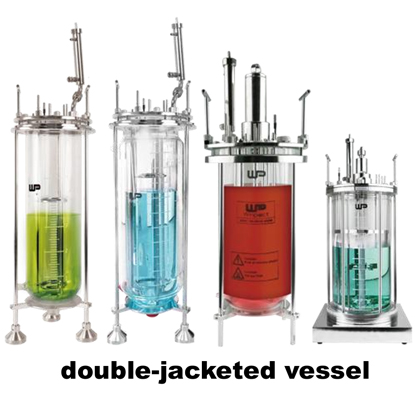 Winpact fermentation system |
IntroductionMotivation:
EGF and TFF3 both support restitution and repair of mucosal epithelial barriers, and TFF3 has been shown to enhance the effect of EGF in wound healing, so delivering the two together is attractive for clinical tissue repair. Gap: expressing multiple proteins in a single host reduces cost and raises production efficiency, but co-expression adds load to the secretion pathway and can trigger a cellular stress response that lowers yield per protein, so it was unclear whether a food-grade host such as L. lactis could secrete both peptides at a useful level. Objective: test the feasibility of co-expressing and secreting EGF and TFF3 in L. lactis, compare total recombinant peptide output against single-factor strains in both flask and bioreactor fermentation, and verify the bioactivity of the fermentation supernatant. Materials and MethodsStrain construction and flask culture:
A dual-expression plasmid placed the EGF and TFF3 genes under the pH-inducible P170 promoter, with an internal ribosome entry site between the two codon-optimised genes and the SP310mut2 secretion signal, giving LL-ET; LL-EGF, LL-TFF3 and an empty-vector strain served as controls. Flask cultures were grown in M17GE broth for 48 h and sampled by centrifugation at 5000 rpm for 10 min at 4 °C. Bioreactor fermentation: Recombinant L. lactis was fermented in a Winpact fermentation system with 800 mL M17GE broth at 32 °C under continuous agitation at 40 rpm for 48 h, each run inoculated with a 10 mL overnight preculture. The culture pH was allowed to fall naturally to 5.8 and then held at 6.25 with 10 N NH4OH, with 50% glucose fed to maintain 20 g/L. Samples were centrifuged at 10,000 rpm for 10 min at 4 °C and supernatant and pellet stored separately at −80 °C. Analysis: SDS-PAGE and Western blot of supernatant and intracellular fractions with densitometry for secretion efficiency; indirect ELISA for EGF and TFF3 concentration; scratch assay on confluent IPEC-J2 porcine intestinal epithelial monolayers, plus a transwell migration assay, to test bioactivity of the fermentation supernatant. Results
ReferencesHuynh E, Li J. Generation of Lactococcus lactis capable of coexpressing epidermal growth factor and trefoil factor to enhance in vitro wound healing. Applied Microbiology and Biotechnology (2015). doi:10.1007/s00253-015-6542-0
|
|
| https://doi.org/10.1007/s00253-015-6542-0 | |
 |
|