|
|
| Cultivation/Fermentation Technique Fusarium venenatum |
April 17, 2025 |
In vitro antidiabetic and antioxidant activities of protein hydrolysates via alkaline
|
|
| Mahshad Davoudi, Hassan Ahmadi Gavlighi, Fataneh Hashempour-Baltork, Kianoush Khosravi-Darani | |
AbstractFusarium venenatum mycoprotein was produced by submerged fermentation in a 3 L Winpact stirred-tank bioreactor on molasses. Four autolysis routes were compared; alkaline autolysates gave the highest antioxidant activity (DPPH ~556, ABTS ~235 μmol Trolox/g) and ~35% αglucosidase inhibition. |
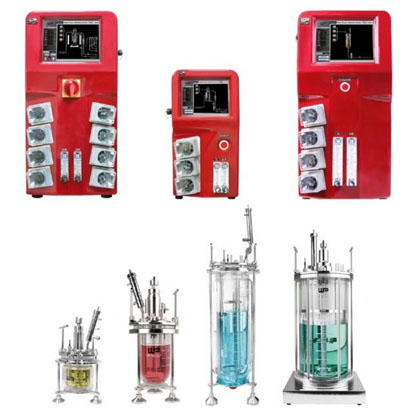 Winpact Fermentation System |
IntroductionMotivation: diabetes is projected to affect 600 million people by 2050, and synthetic antioxidants and preservatives carry safety concerns, driving demand for natural bifunctional antioxidant and antidiabetic compounds. Gap: autolysis has been studied mainly in baker's yeast; the bioactive properties of F. venenatum mycoprotein hydrolysates had never been investigated, despite a 45–55% protein content and a porous chitin/β-glucan cell wall. Objective: compare four lysis routes on bioreactor-grown mycoprotein and evaluate the resulting hydrolysates for antioxidant, α-amylase and α-glucosidase inhibitory, antibacterial and antifungal activity
Materials and MethodsBiomass production:
F. venenatum IR372C was pre-grown on Vogel agar and in shake flasks (25 °C, 180 rpm), then submergedfermented in a 3 L Winpact stirred-tank bioreactor (USA). Molasses replaced glucose in a defined mineral medium; aeration 1 vvm, agitation 400 rpm, 28 °C, pH 5.6, 72 h. A 72 °C / 10 min heat shock was applied at the end to reduce RNA content, and the biomass was sieved and freeze-dried. Autolysis treatments (controls): 15% (w/v) biomass suspensions treated four ways at 55 °C for 48 h with sampling every 12 h — acidic (pH 5.5), alkaline (pH 8.5), plasmolysis (1.5% ethyl acetate + 5% NaCl) and enzymatic hydrolysis (pH 8.5 + 0.2% Alcalase) — with untreated mycoprotein as reference. Analysis: Degree of hydrolysis by OPA; sugars by HPAEC-PAD; amino acids and surface hydrophobicity by HPLC; structure by FTIR-ATR; DPPH and ABTS; α-amylase and α-glucosidase inhibition; antibacterial and antifungal well-diffusion assays. Results
ReferencesIn vitro antidiabetic and antioxidant activities of protein hydrolysates via alkaline autolysis of Fusarium venenatum mycoprotein. Scientific Reports (2025) 15:13287
|
|
| https://doi.org/10.1038/s41598-025-97904-5 | |
 |
|