|
|
| Cultivation/Fermentation Technique | March 2023 |
Combined Transcriptomic and Proteomic Profiling of E. coli under Microaerobic versus Aerobic Conditions: The Multifaceted Roles of Noncoding Small RNAs and Oxygen-Dependent Sensing in Global Gene Expression Control |
|
| Gunn-Guang Liou, Anna Chao Kaberdina, Wei-Syuan Wang, Vladimir R. Kaberdin, Sue Lin-Chao | |
AbstractThis study compared gene and protein expression of E.coli under aerobic vs. microaerobic conditions. Under micro aerobiosis, genes related to acid stress, biofilm formation, electron transport, peptide uptake, and anaerobic respiration were upregulated, while those for iron transport, Fe–S cluster assembly, aerobic respiration, and nucleotide synthesis were downregulated. Proteomic data confirmed these trends. Key small RNAs (CsrC, RyhB, RprA, GcvB) were also identified as regulators. Overall, the results highlight transcriptional and post-transcriptional adjustments enabling E. coli survival in low-oxygen environments. |
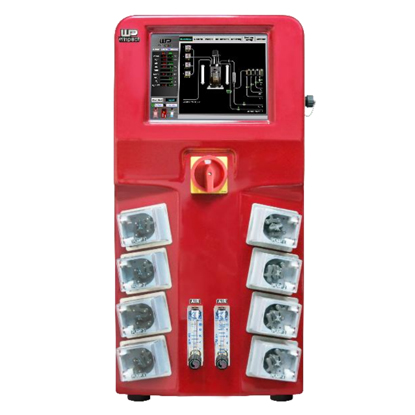 Winpact Model: FS-05 |
IntroductionThis study examined how Escherichia coli adapts to low oxygen. Adaptation is mediated by ArcA- and FNR-driven gene reprogramming that regulates metabolism, energy production, and iron homeostasis, yet previous work lacked an integrated transcriptional and post-transcriptional view. By comparing transcriptomes and proteomes of aerobic and microaerobic cultures, we identified major gene clusters required for microaerobic growth and showed their regulation by small RNAs (RyhB, RprA, GcvB, CsrB, CsrC).
Materials and MethodsThe Winpact Parallel Fermentation System FS-05-220 (Major Science, Saratoga, CA, USA) was used to culture E. coli MG1655 under both aerobic and microaerobic conditions. Each 1 L vessel contained 750 mL of M9 medium, inoculated to an initial OD₄₆₀ = 0.04–0.05, and maintained at 37 °C, 200 rpm, and pH 7.0. Aerobic condition: continuous air supply at 0.4 L/min. Microaerobic condition: nitrogen gas supplied at 0.4 L/min until dissolved oxygen reached zero, continued for 30 min, then stopped and the vessel was sealed. The system automatically controlled agitation and pH, ensuring a stable environment for transcriptomic and proteomic analyses. Samples were harvested at OD₄₆₀ = 0.5–0.6, with five biological replicates for aerobic and ten for microaerobic conditions to ensure reproducibility.
Results
ReferencesCombined Transcriptomic and Proteomic Profiling of E. coli under Microaerobic versus Aerobic Conditions: The Multifaceted Roles of Noncoding Small RNAs and Oxygen-Dependent Sensing in Global Gene Expression Control
|
|
| https://www.mdpi.com/1518274 | |
 |
|