|
|
| Cultivation/Fermentation Technique | 2023 Dec 15 |
Glycine-rich peptides from fermented Chenopodium formosanum sprout as an antioxidant to modulate the oxidative stress |
|
| Chen-Che Hsieh , Shu-Han Yu , Hsing-Chun Kuo , Darin Khumsupan , Hsiao-Chu Huang , Yu-Wei Liou , Chen-Yu Kao , Szu-Chuan Shen , Kuan-Chen Cheng |
|
AbstractRhizopus oligosporus was used to ferment Chenopodium formosanum sprouts (FCS), yielding a glycine-rich peptide (GGGGGKP) from <2 kDa proteins. This peptide showed antioxidant activity and was confirmed to be safe, non-toxic, and non-allergenic via SwissADME and other tools. In silico and in vitro studies revealed that it inhibits v-rel phosphorylation in the NF-κB pathway, reducing oxidative stress and inflammation, indicating potential biomedical applications. |
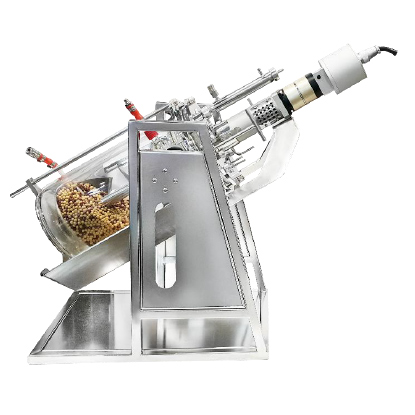 Winpact Model: FS-V-SA05P |
IntroductionFermentation is known to enhance the bioactivity of plant-based proteins. Chenopodium formosanum sprouts are nutrient-rich and contain bioactive compounds. Prior research has highlighted their antioxidant and anti-inflammatory potential. This study focuses on isolating <2 kDa peptides, identifying glycine-rich sequences (GGGGGKP), and evaluating their biological properties and safety through both computational and experimental assays.
Materials and MethodsFermentation Process:
1.5 kg of Chenopodium formosanum sprouts were inoculated with 75 mL of Rhizopus oligosporus spore suspension (10^6 spores/mL). Solid-state fermentation was carried out in a **bioreactor model FSeV-SA05P (Winpact FS-V-SA05P)** at 35°C, with aeration at 0.4 vvm and rotation at 5 rpm, for 4 days. Results
ReferencesGlycine-rich peptides from fermented Chenopodium formosanum sprout as an antioxidant to modulate the oxidative stress
|
|
| https://doi.org/10.1016/j.foodres.2023.112707 | |
 |
|