|
|
| Cultivation/Fermentation Technique Pseudomonas CULTURE TECHNIQUE |
April 19, 2016 Pseudomonas Culture |
Production and Application of Syringomycin E as an Organic Fungicide Seed
|
|
| 1 Department of Biology, 5305 Old Main Hill, Utah State University, Logan, UT 84322, USA 2 Synthetic Biomanufacturing Institute, 650 East Grand Ave, Utah State University, North Logan, UT 84341, USA | |
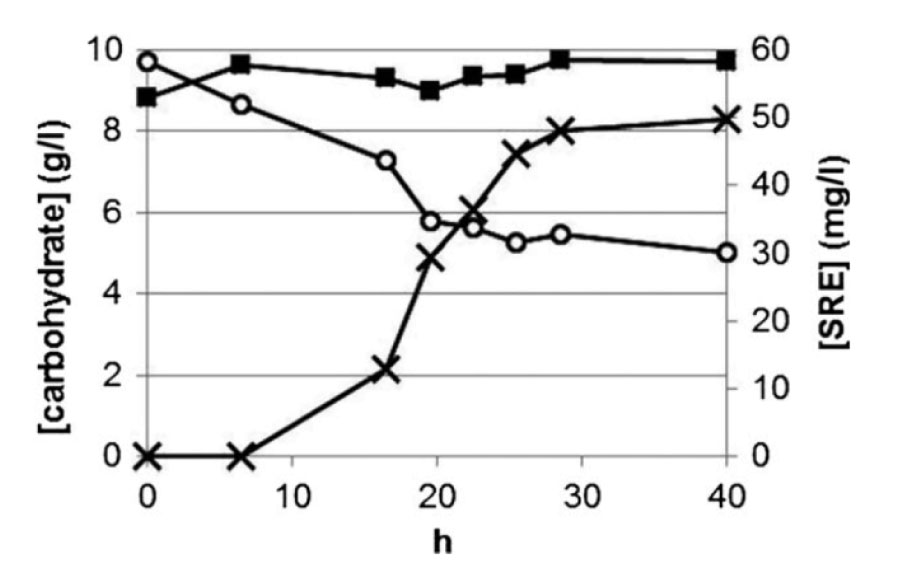
AbstractSyringomycin E (SRE) is a cyclic lipodepsinonapeptide with potent antifungal activity and is produced by certain strains of Pseudomonas syringae pv. syringae. In this study, its potential as an organic-compatible agrofungicide and vegetable seed treatment against the soilborne pathogen Pythium ultimum var. ultimum was examined. A variant of P. syringae pv. syringae strain B301D with enhanced SRE-producing capabilities was isolated and grown in a bioreactor with SRE yields averaging 50 mg/l in 40 h. SRE was extracted and purified through a large-scale chromatography system using organic-compatible processes and reagents. Organiccompatible and scalably produced SRE is potentially a novel organic fungicide seed protectant. |
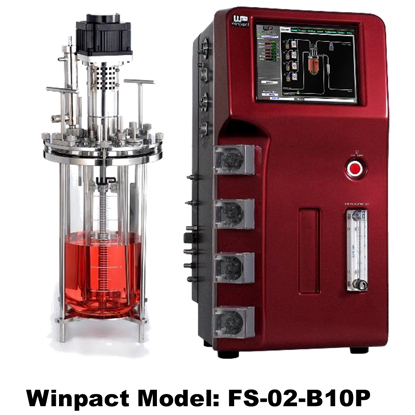 Winpact Model: FS-02-B10P |
IntroductionStrains of Pseudomonas syringae pv. syringae are epiphytes and opportunistic pathogens on healthy and susceptible plants, respectively. They produce two classes of non-ribosomal cyclic lipodepsipeptides commonly known as syringomycins and syringopeptins. Syringomycin E (SRE) is an abundant Syringomycin analog with a 3- hydroxydodecanoic acid group attached to a nonapeptide ring (Segre et al. 1989). Antifungal activities of SRE have been reported against many fungal species, including soilborne pathogens such as Pythium, Fusarium and Rhizoctonia (De Lucca et al. 1999).
As a secondary metabolite natural product, SRE is a potential natural fungicide for disease control applications. SRE inhibits oosporic phytopathogens such as Pythium sp. making it attractive to explore as a seed protectant against diseases caused by these pathogens. Pseudomonas syringae pv. syringae B301D is principally used for the production of SRE in potato dextrose broth (PDB) medium (Zhang and Takemoto 1987), syringomycin minimal (SRM) broth (Gross 1985; Mo and Gross 1991) or improved minimal medium (IMM) broth (Surico et al. 1989), and the methods provide SRE levels in milligram quantities after several days of growth, performed typically without agitation. The goals of this study were to (i) produce scalable amounts of SRE by methods that allow qualification for organic use certification. Materials and MethodsMedium modification
Modifications of growth medium, SRM (1% w/v glucose, 0.4% w/v histidine, 0.8 mM MgSO4, 1 mM FeCl3 and 0.8 mM potassium phosphate, pH7) (Gross 1985; Mo and Gross 1991), were performed to improve SRE production by P. syringae pv. syringae. The antifungal activities of P. syringae pv. syringae strain 2B6 culture extracts were examined as a function of different carbon compounds substituted for 1% (w/v) glucose in SRM. Tested were glycerol, ribose, galactose, mannitol, lactic acid, acetate, or succinate, each at 1% (w/v), glucose plus mannitol, each at 1 or 2% (w/v), glucose, 1% (w/v), plus fructose, 0.1% (w/v), and arbutin, 100 μM, and glucose, 1% (w/v), plus fructose, 0.1% (w/v), and salicylate, 100 μM. The inclusion of 1% (w/v) glucose plus 1% (w/v) mannitol gave the highest antifungal activity, and this mannitol-supplemented SRM was named ‘improved SRE medium’ or‘ISM’. SRE production by P. syringae pv. syringae strain G10 was examined with growth in SRM, ISM, SRM plus 100 μM arbutin and 0.1% (w/v) fructose, ISM plus 100 μM arbutin and 0.1% (w/v) fructose, and SRM plus 100 μM salicylate and 0.1% (w/v) fructose in agitated flask cultures. Scalable SRE production Pseudomonas syringae pv. syringae strain G10 was initially grown in 500 ml of ISM with rotary shaking (200 rpm) at 28°C for 15 h. The 500 ml culture was used as inoculum for a 10 l ISM culture in a 10 L working volume Winpact Bioreactor and Fermenter System (Major Science, Saratoga, CA, USA) with conditions maintained at pH 6.7, 28°C, 2.5 slpm aeration and 350 rpm stirring. At 40 h after inoculating the bioreactor, SRE was only detected (by HPLC) in the foam that accumulated above the culture medium and not in the culture broth. SRE was collected by siphoning the foam material. Results
 ReferencesYukie Kawasaki, Claudia Nischwitz, Michelle M. Grilley, Justin Jones, Jason D. Brown, Jon Y. Takemoto. (2016) Production and Application of Syringomycin E as an Organic Fungicide Seed Protectant against Pythium Damping-off. J Phytopathol 164:801-810
|
|
| https://onlinelibrary.wiley.com/doi/10.1111/jph.12500 | |
 |
|