|
|
| Cultivation/Fermentation Technique | July 2025 |
Comprehensive analysis of repetitive extragenic palindrome sequences identified in bacteria and archaea using a new webbased tool, RepRanger |
|
| Oleg N. Murashko,Connor Morgan-Lang, Chen-Hsin Albert Yu,Hsin-Nan Lin, Anna Chao Kaberdina,Shin-Yu Kung,Vladimir R.Kaberdin, Sue Lin-Chao |
|
AbstractThis study performed a comprehensive analysis of repetitive extragenic palindromic sequences (REPs) in bacteria and archaea and developed a web-based platform, RepRanger, for rapid identification and annotation. Using this tool, more than 4,000 REPs were identified in the E. coli MG1655 genome, with ~52% of small noncoding RNAs (sRNAs) containing REPs. Ten consensus motifs were characterized, showing potential roles in translational regulation and environmental adaptation. Comparative analysis revealed that REP motifs are more similar in pathogenic and environmental strains than in commensal or laboratory strains, and that REPs are widely distributed across bacteria and archaea. |
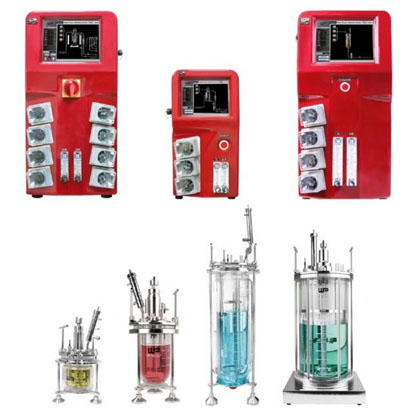 Winpact Model: FS-V-SA05P |
IntroductionREP elements were first discovered in E. coli and *Salmonella* and later identified in many bacterial species. These short sequences form secondary structures that influence gene expression and RNA stability. However, their conservation, biological functions, and evolutionary roles remain unclear. As previous search tools are no longer available, this study established the RepRanger platform to enable systematic exploration of REP distribution and function across species.
Materials and MethodsThe Winpact Parallel Fermentation System FS-05-220 (Major Science Inc., USA) was used to culture E. coli MG1655 in M9 medium at 37°C, 200 rpm, and pH 7.0, with continuous aeration at 0.4 L/min. Cultures were harvested for RNA isolation and Northern blot analysis. For bioinformatics, RepRanger (PHP/Python) processed genome sequences (FASTA) and annotations (GFF) to identify REPs, combined with MEME, FIMO, and TomTom for motif analysis. Novel sRNAs were identified from RNA-seq datasets, with Integrative Genomics Viewer (IGV) and ShinyGO used for functional analysis.
Results
ReferencesComprehensive analysis of repetitive extragenic palindrome sequences identified in bacteria and archaea using a new webbased tool, RepRanger
|
|
| https://doi.org/10.1128/msphere.001 | |
 |
|