|
|
| Cultivation/Fermentation Technique Scrophularia striata CULTURE TECHNIQUE |
October 8, 2015 Scrophularia striata |
Bioproduction of phenylethanoid glycosides by plant cell culture of
|
|
| Sedigheh Ahmadi-Sakha, Mohsen Sharifi, Vahid Niknam | |
AbstractScrophularia striata cell suspension culture was scaled up from shake flasks to a Winpact FS-01-A05P bioreactor (10 L vessel, 5 L working volume) at pH 4.8, 0.5–1.5 L/min air, 110–170 rpm, 25 °C in darkness. Biomass reached 15.64 g/L DW and acteoside 1404.20 μg/g DW, about threefold the shake-flask level. |
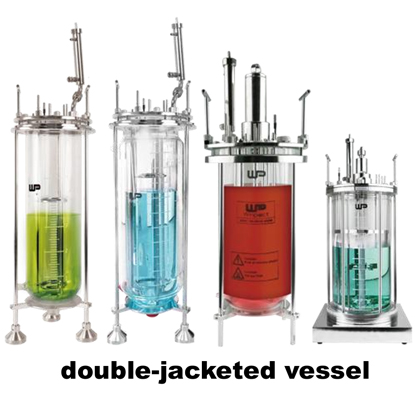 Winpact Model: double-jacketed vessel |
IntroductionMotivation:
phenylethanoid glycosides (PeG) such as acteoside and echinacoside are plant polyphenols with anti-inflammatory, antioxidant, antibacterial and antitumour activity; their chemical structures are complex and chemical synthesis is costly, so plant cell culture is used as a source of these high-value secondary metabolites. Gap: transfer from shake flask to bioreactor is the essential step toward commercial production, but scale-up results are not predictable — in Cistanche deserticola PeG production fell on transfer to a bioreactor, and in Podophyllum hexandrum shake flasks outperformed the bioreactor, so the conditions have to be established for each species. Objective: establish the optimal bioreactor conditions for cell suspension culture of S. striata and compare biomass, cell viability and PeG (acteoside and echinacoside) production against shake flasks. Materials and MethodsCell culture and inoculum:
S. striata callus was grown on MS medium with 2 mg/L NAA, 0.5 mg/L BA and 30 g/L sucrose, subcultured every 15–17 days at 26 ± 1 °C. Suspension cultures were initiated from 2 g of white friable callus in 50 mL liquid medium and maintained at 110 rpm, 25 °C in darkness. Bioreactor cultivation: A Winpact FS-01-A05P system was used, comprising a 10 L double-jacketed vessel for temperature control, a TruDo dissolved oxygen sensor, a pH probe and an air pump. The vessel with 5 L modified MS medium was autoclaved at 121 °C for 20 min, then inoculated with fresh cells under laminar flow. Agitation 110–170 rpm, air flow held at 0.5 or 1.5 L/min, 25 ± 1 °C in darkness for 25 days; pH was held at 4.8 by automatic addition of 0.5 mol/L NaOH or HCl. 15 mL samples were drawn through the sampling port every 2 days. Analysis: Dry and fresh weight for biomass; cell viability by Evan's blue staining; PeG extracted from 0.2 g dried cells with 90% methanol and quantified by HPLC with DAD at 330 nm on a C-18 column (0.04% acetic acid / acetonitrile, 82:18). Results
ReferencesAhmadi-Sakha S, Sharifi M, Niknam V. Bioproduction of phenylethanoid glycosides by plant cell culture of Scrophularia striata Boiss.: from shake-flasks to bioreactor. Plant Cell, Tissue and Organ Culture (PCTOC) (2015). doi:10.1007/s11240-015-0891-3
|
|
| https://doi.org/10.1007/s11240-015-0891-3 | |
 |
|