|
|
| Cultivation/Fermentation Technique | March 2023 |
Sodium Fluoride Exposure Leads to ATP Depletion and Altered RNA Decay in Escherichia coli under Anaerobic Conditions |
|
| Oleg N. Murashko , Kun-Hai Yeh, Chen-Hsin Albert Yu, Vladimir R. Kaberdin , Sue Lin-Chao | |
AbstractThis study investigated the effects of sodium fluoride (NaF) on gene expression and RNA metabolism of *E. coli* under anaerobic conditions. NaF caused ATP depletion, which in turn affected mRNA stability and degradation rates. Using tiling array and Northern blot analysis, several REP-sequence-containing genes were significantly upregulated. RNA stability assays revealed that NaF slowed transcript degradation, thereby enhancing their abundance, with RNase E playing a critical role in this process. |
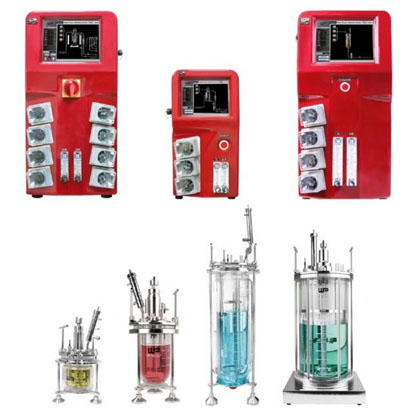 Winpact Fermentation System |
IntroductionFluoride is widely used to inhibit bacterial growth, yet the molecular mechanisms underlying cellular responses under anaerobic conditions remain unclear. The team analyzed transcriptomic changes in E. coli under sodium fluoride exposure, focusing on the impact of ATP depletion on RNA metabolism. The aim was to clarify how NaF, via energy metabolism, alters RNA stability and thereby regulates bacterial adaptive responses.
Materials and MethodsE. coli strains were cultured under anaerobic conditions in a 1 L Winpact bench-top fermentor (Major Science Inc., USA) and treated with 20 mM and 70 mM NaF. Transcriptomic profiling was performed using tiling arrays, and selected gene expression was validated by Northern blot. RNA stability was assessed by transcript decay assays, with additional confirmation of RNase E involvement.
Results
ReferencesSodium Fluoride Exposure Leads to ATP Depletion and Altered RNA Decay in Escherichia coli under Anaerobic Conditions
|
|
| https://doi.org/10.1128/spectrum.041 | |
 |
|