|
|
| Cultivation/Fermentation Technique Geobacillus stearothermophilus CULTURE TECHNIQUE |
April 11, 2013 Geobacillus stearothermophilus |
Phospholipid analyses by MALDI-TOF/TOF mass spectrometry using 1,5-diaminonaphthalene as matrix |
|
| Wei Dong, Qing Shen, Joewel T. Baibado, Yimin Liang, Ping Wang, Yeqing Huang, Zhifeng Zhang, Yixuan Wang, Hon-Yeung Cheung | |
AbstractGeobacillus stearothermophilus was grown at 60 °C, 300 rpm in a 5 L Winpact bench-top fermentor. With 1,5-diaminonaphthalene (DAN) as MALDI matrix, phospholipid spectra were free of matrix interference, with ~5–10× higher S/N at lower laser energy than DHB or 9AA; PE and PG were the major classes. |
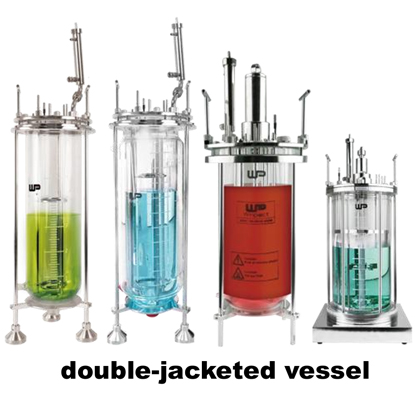 Winpact Model: 5 L bench-top fermentor |
IntroductionMotivation:
phospholipids (PLs) make up 50–60% of membrane lipid mass and regulate cell signaling, growth and death; MALDI-MS offers high sensitivity, salt tolerance and throughput for lipidomics of complex biological samples. Gap: chemical background noise in the low-mass region limits MALDI lipid analysis; the common matrices DHB and 9AA produce matrix or alkali adduct ions, and 9AA works only in negative ion mode. Objective: evaluate 1,5-diaminonaphthalene (DAN) against DHB and 9AA on six PL standards in both ion modes, then apply it to PL extracts from fermentor-grown G. stearothermophilus. Materials and MethodsBiomass production:
G. stearothermophilus NCTC 10003 was cultured in a 5 L Winpact bench-top fermentor (Major Science, USA) at 60 °C and 300 rpm. Cells were harvested at mid-exponential phase (OD600 ≈ 0.6) by centrifugation at 6000 × g for 10 min and the pellet was stored at −20 °C. Lipid extraction: Modified Bligh–Dyer method: 0.1 g cells in 1.2 mL CHCl₃/MeOH (2:1, v/v), sonicated 10 min, phase-separated with 0.4 mL water and centrifuged at 8000 × g for 10 min; the aqueous phase was re-extracted twice with 0.8 mL CHCl₃. Pooled organic phases were dried under nitrogen, redissolved in 1.0 mL CHCl₃/MeOH (2:1) and stored in the dark at −80 °C; extraction was kept at 4 °C to limit oxidation and hydrolysis. MALDI-TOF/TOF analysis: DAN (5 mg/mL in isopropanol/acetonitrile 60:40), DHB (30 mg/mL in methanol) and 9AA (10 mg/mL in isopropanol/acetonitrile) were premixed 1:1 with samples. Spectra were acquired on an AB Sciex 4800 MALDI-TOF/TOF (355 nm Nd:YAG, 200 Hz, 20 kV, reflector mode, m/z 400–1200) in positive and negative ion modes, using DMPC, DPPE, DPPI, DMPS, DMPA and DPPG standards; species were assigned by MS/MS with the LIPID MAPS database. Results
ReferencesWei Dong, Qing Shen, Joewel T. Baibado, Yimin Liang, Ping Wang, Yeqing Huang, Zhifeng Zhang, Yixuan Wang, Hon-Yeung Cheung. Phospholipid analyses by MALDI-TOF/TOF mass spectrometry using 1,5-diaminonaphthalene as matrix. International Journal of Mass Spectrometry (2013) 343–344:15–22
|
|
| https://doi.org/10.1016/j.ijms.2013.04.004 | |
 |
|