|
|
| Cultivation/Fermentation Technique | 12 December 2024 |
Development of High-Glucosinolate-Retaining
|
|
| Chen-Che Hsieh 1,Yuan-Heng Liu 2,Shin-Ping Lin 3,4,5,6ORCID,Shella Permatasari Santoso 7ORCID, Kaemwich Jantama 8ORCID,Tsung-Yu Tsai 9,Chang-Wei Hsieh 10,*ORCID andKuan-Chen Cheng |
|
| Abstract This study enhanced cabbage nutrition and functionality via bioreactor-based lactic acid fermentation, focusing on glucosinolate retention. Using Lactiplantibacillus plantarum, Lactobacillus acidophilus, and Bifidobacterium longum, fermentation (35 °C, 24 h, 5 rpm) significantly improved antioxidant activity (16.32% increase in DPPH scavenging). Glucosinolate retention reached 82.02%, and remained at 66.49% after 14 days of storage at 4 °C. Results support bioreactor fermentation as a promising method for boosting cabbage’s nutritional and commercial value. | 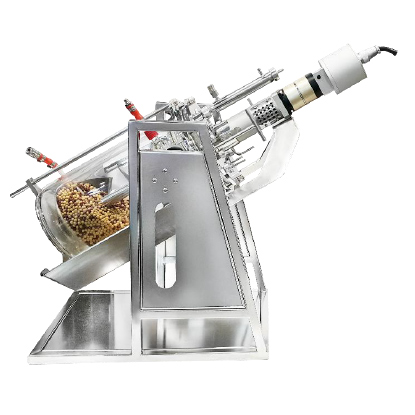 Winpact Model: FS-V-SA05P |
IntroductionCabbage (Brassica oleracea var. capitata) is a widely cultivated, low-cost vegetable rich in glucosinolates, known for antioxidant and anticancer effects. However, these compounds degrade during processing via myrosinase activity. Lactic acid fermentation lowers pH, inhibiting this enzyme and preserving glucosinolates. Solid-state fermentation is cost-effective and environmentally friendly. This study used cofermentation with Lactiplantibacillus plantarum, Lactobacillus acidophilus, and Bifidobacterium longum, followed by scale-up in a 5 L bioreactor to enhance glucosinolate retention, storage stability, and probiotic value.
Materials and MethodsFor the scaled-up production trial, a 5 L solid-state bioreactor (FS-V-SA05P, Major Science, Taoyuan, Taiwan) was used. The parameters were as follows: the fermentation temperature was set at 35 °C, the fermentation time was 24 h, the stirring speed was 5 rpm, and the inocula of lactic acid bacteria (10⁷ CFU/mL) were 0.3% and 3.0% (w/w) of the weight of the salted dehydrated cabbage.
ResultsThis study implemented a 5 L bioreactor-based co-fermentation of cabbage using B. longum BCRC 14634, L. acidophilus BCRC 14079, and L. plantarum BCRC 11697 to retain antioxidant properties and glucosinolates. Fermentation increased free phenolic and total flavonoid contents by 41.13% and 24.44%, respectively. The lowered pH inactivated myrosinase, achieving 82.02% glucosinolate retention. Under 35 °C and 5 rpm, even with reduced inoculum size, retention remained high. After 14 days at 4 °C, glucosinolate content and LAB count declined by 23.85% and 4.40 log CFU/g. The method showed superior retention over traditional processing.
ReferencesDevelopment of High-Glucosinolate-Retaining Lactic-Acid-Bacteria-Co-Fermented Cabbage Products
|
|
| https://www.mdpi.com/2311-5637/10/12/635 | |
 |
|